Microelectronics and VLSI Circuits
Domain-aligned core projects, blended with AI, create undeniable readiness for competitive onsite research roles; similarity between past work and lab expectations becomes your strongest signal.
Can you share a quick introduction about yourself, including where you went for your foreign internship and the project you worked on?
My name is Kalepu Keerthi Vallika Devi. I’m a 4th year undergraduate (dual degree) of the department of Electronics and Electrical Engineering. My specialisation for M.tech is Microelectronics and VLSI Circuits. I am from Rajamahendravaram, Andhra Pradesh. I have interned at Yale University. It was an on-site internship and I got it through FTP. I worked on Finding Optimized Quantisation Techniques For Better Energy-accuracy tradeoffs.
Was it onsite or remote?
It was an on-site internship and I got it through FTP.
When did you begin your preparation, and please share a brief timeline of your preparation?
For the preparation, you have to first decide what domain you want to go to. Then,you have to contact every professor in your selected domain and do projects. Thiswill help you gain experience. You can now contact other colleges like IISCBangalore and do some more projects. For on-site, you definitely need some priorproject experience. I did projects on my departmental core, combining AI. The project that I have done in KGP is on Filter Design Using AI under a professor from the CSE department. Then, a similar project was released through FTP. I applied and I got the internship.
How did you make your CV for a Foreign Internship, and what do you think were the key aspects that got you selected? Is there any CGPA criteria for interning abroad? If yes, then what can be considered a safe CGPA?
When applied through FTP, the key aspect that is seen by your professor is generally your CGPA. It is expected that you have a 8+ CGPA, but don’t be disheartened if it is less than that, that too, is fine. The professors also see the projects that you’ll be keeping. Some professors see your awards and achievements section too. For research, it is better if you have done as many projects as you can. It generally gives the professors a very good impression if you have some paper published. For my CV, first I kept my projects, then I included my core projects. I participated in GC hardware modelling and I had done some self projects on hardware modelling so I had included those. CV for research is different from CDC. It is fine if your CV is of 2 pages, unlike in CDC. You don’t have to insist so much on alignment. General alignment is expected, you don’t have to go in as deep as you have to for CDC. What helped me was the domain I worked in, was very similar to the one the professor was expecting.
Which other programs did you apply for, how many you got shortlisted for, and why did you choose this program only?
I did not apply for any other programs. I was interested and applied only for this.
What do you think are the perks of a Foreign Internship, and how can it help in your future career aspects?
It is a very good experience that you can have. Generally, it is funded and you gothere and it is a one-time experience in life. You shouldn’t miss out on thisopportunity. For dual degree students, it is mandatory to do something after 3rd year, research or corporate internship. It is a very good CV pointer. If you get to enroll in a very good university, it becomes the highlight of your CV. You also get to learn a lot through the process including the visa process, the documentation. The process becomes a lot easier if you are applying through a program, but if you are applying through FTP or cold-mailing then you have to get the entire documentation done by yourself.
Was your internship funded or unfunded? If not funded [Onsite], then how did you manage your expenses?
My internship was funded.
Can you describe a typical day in the lab or research facility?
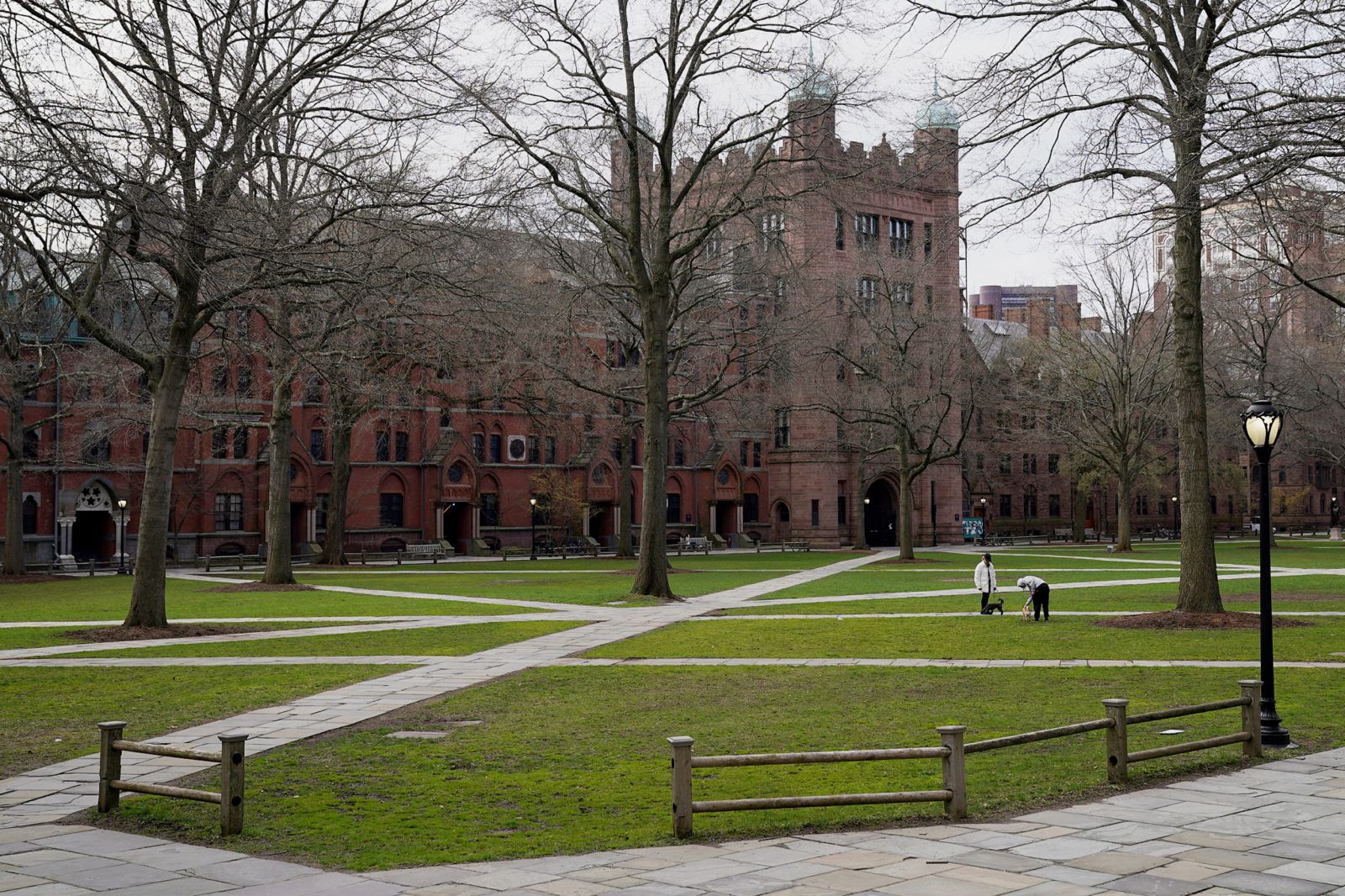
I was in New Haven, US. At that time, it was summer there. It was very quietwith not many students and Yale University campus is not like IIT KGP’s. Allthe departments are spread over the street. Each department is in a separatestreet. There are no hostels there so you have to get an apartment. I woke upat 7 am, freshened up, and made breakfast. There you have to do all yourwork by yourself. You can eat out but it’s too costly and sometimes, not sohealthy, so I preferred cooking myself. I was at the lab by 10 am. There are nolunch breaks in between like a corporate internship so I had to eat in betweenwork. At around 5:30 or 6 pm, I used to come from the lab, eat something,maybe watch some movies or prepare for my CDC. I got CDC after cominghere. So, much of my time went into cooking and preparing for my CDC.There it used to be dark after 8:30 so if I had some work, like getting thegroceries, I went and did that.
How did you fund your research internship abroad? Did you apply for any grants or scholarships?
I got the IIT Kharagpur scholarship. We have 2 scholarships from IIT KGP- GKF and IITKGP F. I applied for GKF and I got it. Also, for the amount of time you stay, you need to have a certain amount of requirements to show that a student is having this much amount to come and live here. So, for me, some amount was from this scholarship and the remaining amount was covered by the US government.
In what ways did IIT Kharagpur support or influence your journey toward this opportunity?
The name IIT has in India is quite influential. The professor i was working under was an Indian so she knew how the students of IIT are. So, having the IIT Kharagpur tag definitely helped. Generally, when you are cold-mailing a professor, they don’t reply to anyone. They reply only when they see any potential. If you are a student of IIT and the professors see that you are from a good university, there are higher chances of getting a reply from them.
How did Students' International Relations Cell help you in getting this internship?
I was the co-ordinator for FTP last year so, obviously being a part of SIRC helped me since I knew that these things exist. For FTP, there is a lot of work the cell does just to get you sorted.
What guidance would you offer juniors aiming for a Foreign Internship this year, and could you outline a basic roadmap for them?
First of all, I wasn’t thinking of applying for a research internship and all. But, then my seniors convinced me that I should really give it a try because at that time, I only wanted to focus on CDC majorly since I was interested only in core and it takes a lot of effort getting into core companies. So, I only had plans to sit and study for the whole summer in order to bag an internship. So, my seniors really motivated me that you can manage, try it and so I did. So, never ever think that for preparing for something you need to give it all your time. You can manage it. It just depends on your interests and time management, it can be hard at times but it is manageable if you are strong enough and you don't go through many deviations. For those who have a dual degree can only apply after 2nd year but others can apply before that. After 2nd year, getting an on-site internship is a bit tougher, you can get remote though. You have to do some projects before 2nd year. The benefit you will be getting is that you can start it from 1st year. For us, it wasn’t like that since we start our core subjects only from 2nd year. Finding pure core internships can be somewhat tougher but if you can imbibe some ai or data in it, there are numerous opportunities. Right now, in almost every department, a lot of work is being done on core plus ai. So, I would recommend learning a bit about data and ai. Never stop trying, it is manageable and you can crack both foreign internships and CDC. Don’t lose hope and always contact your seniors. There are many seniors here who will help you, they are very approachable. I myself, got a lot of help from my seniors with the visa process. The process can be very tedious and stressful. So, yes, never stop trying and don’t be afraid to ask for help from your seniors.