Prediction of adsorption properties of Transition Metals
Identify your field of interest and pick a research area and start working on it.
Which University did you apply for a research internship and what was the name of the project?
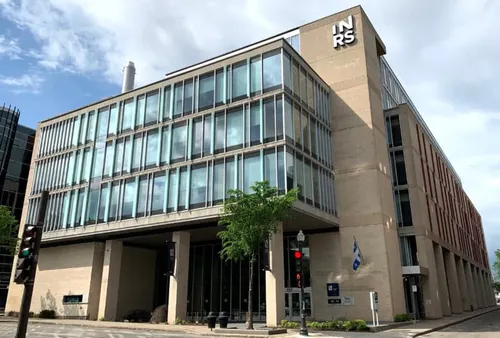
I applied for a research internship at Institute National de la Recherche Scientifique and the name of the project I worked on was "ML Based Modeling for the prediction of adsorption properties of Transition Metals".
Was it Onsite or Remote?
The research internship was onsite, in the city of Quebec, Canada.
Can you briefly describe the research project you have worked on?
The research project I worked on was about predicting the adsorption properties of transition metals with different kinds of adsorbents, using machine learning in which we built machine learning models using our own data.
What are the selection criteria, and does the CG matter?
There were a total of around 60-70 thousand applications, out of which 1000-1500 people were selected. We had to upload transcripts and CV on a portal of MITACS. Along with that, minimum one letter of recommendation from any professor of your institute or your faculty advisor was needed.
What previous experience do you have that you think will be beneficial for this internship?
I have been working on machine learning since my second year and I’ve also worked in different startups but the main thing that came in handy was one of the research papers I published along with one of the faculty at my department, Department of Metallurgy and Materials Engineering. Besides that, I’ve also worked at University of Tartu, Tartu, which was a remote internship. So, these kinds of research internships helped me a lot
Were there any significant challenges you faced during your research? How did you overcome them?
Not many challenges. The subject was kind of tough as it was interdisciplinary, it required good knowledge of both, machine learning and material science, and the computational part was very much experimental, therefore you can’t expect much good results, but we dwelled very deep in the subject and got some good results and my PhD mentor, allotted to me there, also helped me a lot there.
How do these types of internships contribute to the academic or career goals of students?
A research internship in any foreign university contributes a lot to your CV and is beneficial if one is aiming to pursue Masters or PhD programs. Even after the onsite internship, continuing the project remotely helps a lot. Through these foreign research internships, one can get recommendation letters from the professor under which they worked
How can anyone tailor their CV to highlight relevant skills and experiences for a research internship?
One has to start working and get experience in research in the earlier stages of college life. Identify the field in which you are interested in and then start working on a project and deep dive into it. It will take time of at least one year to get your research paper published in a good journal because without any publication, a project will be a bit less impactful and it will be a demotivating thing, too. One can start working on a project under any professor of our institute.
Can you describe a typical day in the lab or research facility?
On weekdays, I used to go to the university at 9 pm and used to return back from there at around 3 pm. After coming back from the university, I often went to explore and roam the city of Montreal, where I was staying.
How did you fund your research internship abroad? Did you apply for any grants or scholarships?
The total amount of scholarship, which was through MITACS, was 8,800 Canadian Dollars, which is more than enough.
What was it like adapting to the cultural environment of the host country? What did you enjoy most about living and working in the host country?
At first, it was a bit challenging because the place was not english friendly as the state was bilingual and mostly French, so people usually speak French. I visited 3-4 cities in Canada, in which Quebec was one and all of them were very beautiful. I think the natural beauty of Canada is kind of underrated and the people were also very nice.
Would you recommend the institution or country where you completed your internship to others? Why or why not?
Yes, absolutely. It was a great experience, academically and non-academically, both.
What advice would you give to someone considering a research internship abroad?
Identify your field of interest and pick a research area and start working on it. Study the field and then approach any faculty member of our institute or any foreign university. Work on it for at least 6-8 months to get some idea of how a research internship and how the research atmosphere is.